
GCSE Maths: How to Study, Navigate the Exam, and Choose the Right Tutor
GCSE Maths: How to Study, Navigate the Exam, and Choose the Right Tutor
If you are looking for a GCSE Maths tutor, it’s not just about knowing the subject. The best support combines deep mathematical knowledge, strong exam technique, and evidence-based strategy.
With over 14 years of experience in tutoring and university admissions, A&J Education helps students achieve measurable progress, build lasting confidence, and approach exams with structure and focus.
We are also proud recipients of the King’s Award for Enterprise, recognised by the UK Government as the most prestigious business award.
What Is GCSE Mathematics and Why It Matters
GCSE Maths uses a 9 to 1 grading scale, with grade 9 being the highest and grade 1 the lowest. Grade 4 roughly equates to the old grade C. Each year, grade boundaries are adjusted to reflect the difficulty of that year’s papers.
Mathematics extends far beyond Year 11 students who achieve low grades often receive additional support to keep improving. Because results vary widely across regions, consistent and personalised tutoring can be essential in maintaining progress.
Structure of the GCSE Maths Exam
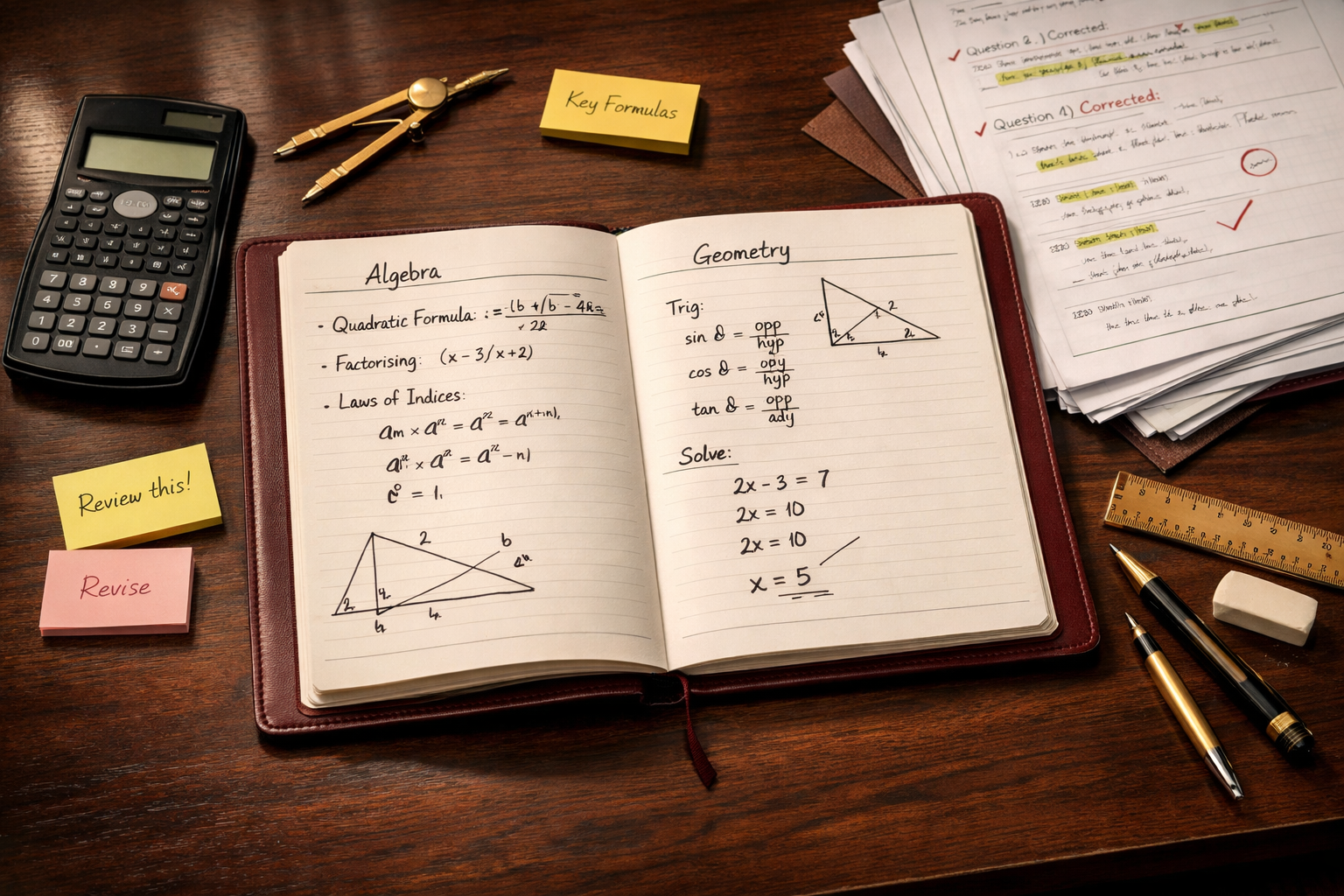
Foundation vs Higher Tier
Students take either the Foundation tier (grades 1–5) or the Higher tier (grades 4–9). The choice depends on their prior performance, confidence, and target grade.
Calculator and Non‑Calculator Papers
There are three exam papers:
- Paper 1: Non‑calculator
- Papers 2 & 3: Calculator allowed
Each paper lasts 1 hour 30 minutes and counts for one‑third of the final grade.
Topics include number, algebra, ratio and proportion, geometry, probability, and statistics. Each paper increases in difficulty as it progresses, and questions often blend multiple topics so surface-level revision isn’t enough.
Why GCSE Maths Is Challenging for Many Students
Many students don’t fail because they lack knowledge, but because they struggle to recognise methods under pressure, link multiple concepts, or apply exam technique consistently. Common issues include rushed working, poor question selection, and weak retrieval.
A skilled tutor helps students overcome these barriers through feedback, structured practice, and smart time management.
How to Study Effectively for GCSE Maths

Start with Diagnosis, Not Volume
Identify weak areas before revising everything at once.
Revise in Short, Regular Sessions
Frequency matters more than duration. Avoid burnout.
Practise Mixed‑Topic Questions
Ensures flexibility when tackling integrated exam questions.
Use Official Past Papers and Mark Schemes
Understand examiner expectations and mark boundaries.
Track Recurring Mistakes
Spot patterns; improvement comes from correcting errors, not avoiding them.
Train Calculator and Non‑Calculator Work Separately
Each requires different reasoning and timing strategies.
Effective study is about structure, reflection, and deliberate practice, not passive reading.
Foundation vs Higher: How to Decide
The best tier is the one that maximises your chance of meeting your target grade. Higher is not automatically “better.”
Base the decision on:
- Mock exam performance
- Topic security
- Exam confidence
Do You Need a Tutor?
Not every student does. Some thrive through consistent school teaching and structured independent study.
When tutoring is used, small‑group or one‑to‑one sessions can both be effective — what matters most is targeted, consistent, and aligned support.
What to Look for in a GCSE Maths Tutor
Key Qualities
- Conducts diagnostic assessment before teaching begins
- Advises on Foundation vs Higher tier selection
- Uses official exam materials
- Teaches exam technique as well as methods
- Ensures clear progress tracking
- Builds student independence, not dependence
Expertise matters a good tutor prioritises strategically, adapts responsively, and consistently moves the student toward measurable outcomes.
Limitations of Tutoring
Tutoring is not magic. It cannot replace consistent study, rest, or school effort.
The wrong tutor can create dependency rather than progress.
The right approach, however, improves learning quality, exam confidence, and performance under timed conditions.
Success in Practice: Case Studies
- Case Study 1: Borderline 4/5 student, achieved steady progress through mixed‑paper practice, error logs, and structured weekly revision.
- Case Study 2: High‑achieving 8/9 student, improved further by refining exam technique, pacing high‑mark questions, and reviewing full‑mark model responses.

The right GCSE Maths tutor helps students:
- Understand exam structure
- Study more strategically
- Choose the correct assessment tier
- Build the confidence to perform at their best
Success in maths isn’t just about ability, it’s about structure, consistency, and expert guidance.













.png)

